
6 min read · Updated on July 17, 2026
Stop pushing the water away – grab it: the catch and the high elbow
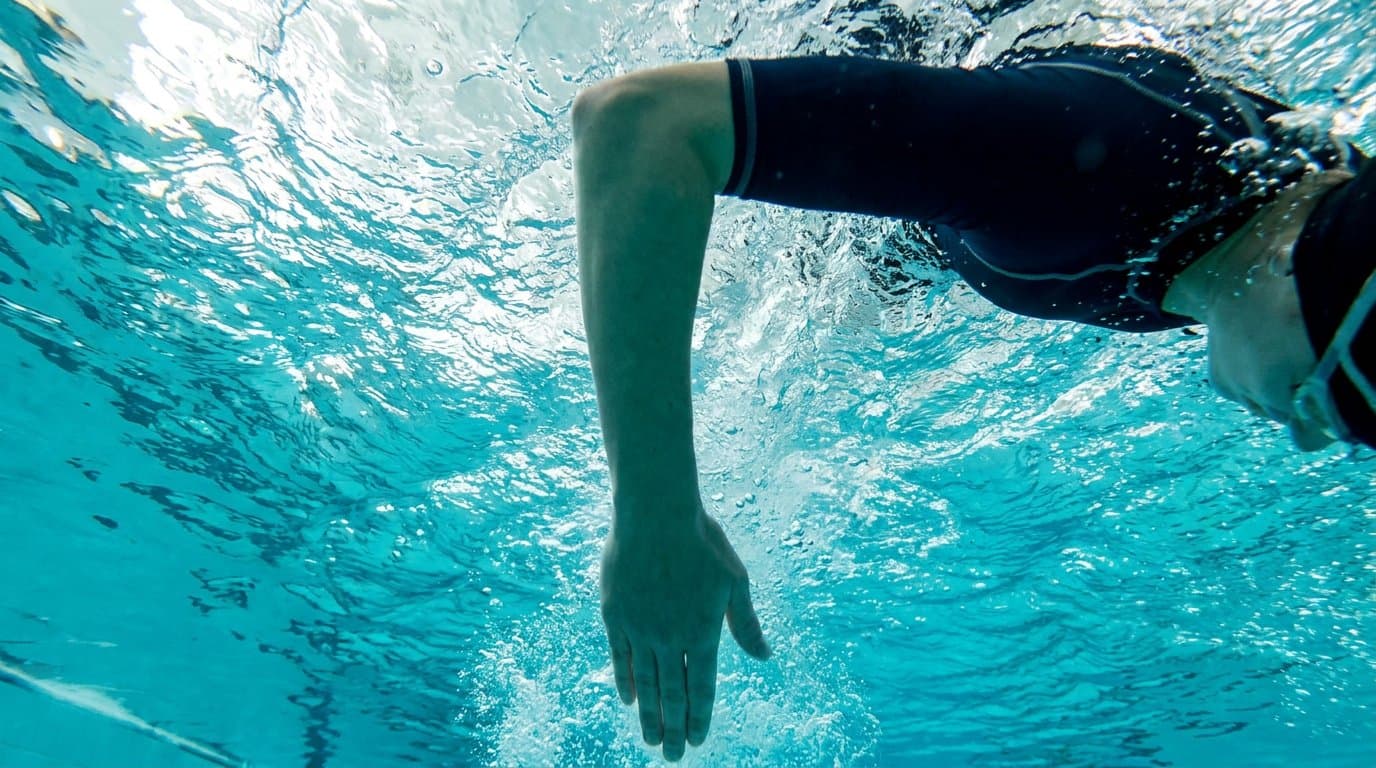
Most swimmers think of the arm stroke as strength: pull hard, push hard. But the most important moment is decided much earlier and much more quietly – in the catch phase, gripping the water right at the front.
The idea is simple: you don't push the water away, you grab it and pull your body past it. The key is the high elbow, in English the “Early Vertical Forearm” (EVF) – forearm and hand become one large, vertical paddle.
What really happens in the catch
After the hand enters, your arm extends forward. Instead of pressing it down stiffly, you tip your hand and forearm downward while the elbow stays high near the surface. Now the whole surface from fingertips to elbow faces backward – against the direction you want to go.
Physically, you use a much larger propulsive surface. A straight, downward-pressing arm mostly moves water down (and lifts you) instead of pulling you forward.
The most common mistake: the dropped elbow
The classic is the dropped elbow: the elbow sinks first, the hand points forward-and-down, and you push the water down instead of back. It feels powerful but produces little propulsion.
Cue: the elbow stays up, the fingertips point at the pool floor. Imagine reaching over a large barrel and laying your forearm and hand around the outside – that's the curve you're after.
Grip the water, don't stir it
A good catch isn't a yank. Grip the water as if you wanted to hold it, then accelerate the pull smoothly to the hip. More important than maximum force is the feeling of pulling past a fixed point – swimmers call it “feel for the water”.
The pull runs under the body toward the hip, not across and not over the midline. That keeps propulsion travelling in a straight line.
Three drills for a better catch
These drills train the high elbow without you having to think about every movement:
- Front sculling: small figure-eight movements of the hands well in front – trains pure feel for the water.
- Slow-motion freestyle: swim extremely slowly and briefly “freeze” in the catch, elbow high, fingertips down.
- Fist swimming: a few lengths with closed fists, then open them – suddenly you feel how much surface the forearm and hand grip.
Frequently asked questions
- What is the catch phase in freestyle?
- The catch phase is the start of the underwater pull where you grip the water out front. The hand and forearm tip downward while the elbow stays high, so a large surface faces backward and can pull you forward.
- What does a high elbow (EVF) mean in swimming?
- EVF stands for “Early Vertical Forearm”: the forearm is set vertical early in the pull while the elbow stays high near the surface. Hand and forearm then act together like a large paddle and create more propulsion.
- Why does my freestyle pull produce little propulsion?
- Often because of a dropped elbow: you push the water down instead of back. Keep the elbow high, tip the hand and forearm first, and pull in a straight line under the body toward the hip.
- How do I improve my feel for the water?
- With sculling drills (small figure-eight hand movements), slow-motion freestyle with a deliberate catch, and fist swimming. All three sharpen your sense of how much water your forearm can grip.