
6 min read · Updated on July 17, 2026
Ironman swimming: my 5 lessons for maximum energy efficiency
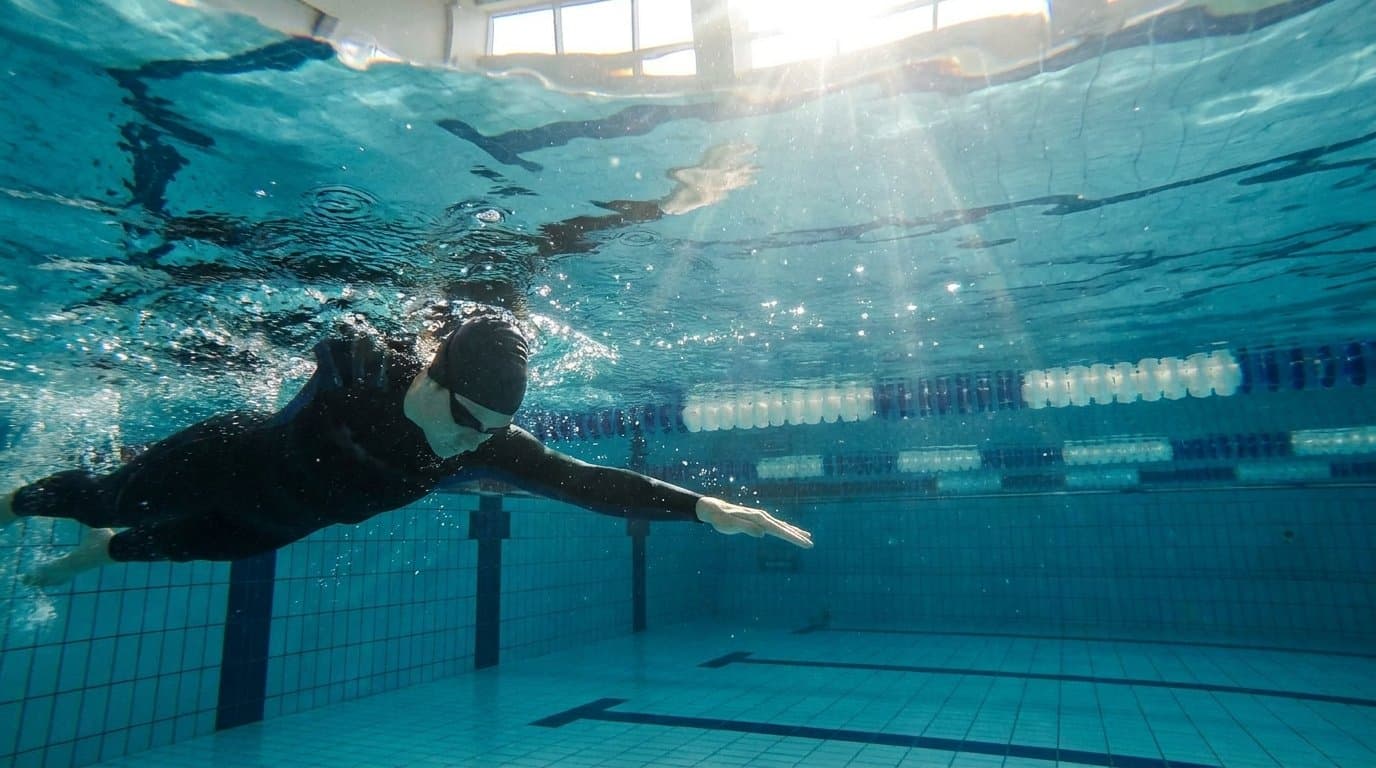
In an Ironman, the swim is only the beginning: 3.8 kilometres, then 180 kilometres on the bike and a marathon. Swim here with raw strength and you'll pay for it hours later with empty legs. On the long course only one currency counts – energy efficiency.
Over thousands of training kilometres I learned that you don't optimise swimming with more strength but with less waste. These are my five most important lessons.
Lesson 1: drag is the enemy, not the clock
At first I wanted to get faster by pulling harder. The breakthrough came when I stopped fighting the clock and started fighting drag. Every edge, every sinking hip costs energy I'll miss later. Less drag is always cheaper than more power.
Lesson 2: body position is your savings account
A flat, streamlined position is the cheapest speed there is: it costs almost nothing and saves enormously over 3.8 kilometres. Head down, hips high, body long – that's not a matter of style, it's energy management.
Lesson 3: rhythm beats sprint
On the long course there's no 50-metre finishing sprint. There's a rhythm you can hold for hours. A calm, bilateral breathing pattern keeps that rhythm stable and the muscles supplied with oxygen – panicked one-sided breathing breaks it.
Lesson 4: distance per stroke, not counting strokes
I stopped counting my strokes just to make them faster – and started covering more distance with each one. Fewer, longer strokes with clean gliding are almost always more economical on the long course than many short ones. Distance per stroke is the most honest efficiency metric.
Lesson 5: relaxation is technique
Tense muscles consume oxygen even when they add nothing to propulsion. The hardest and most important lesson was staying relaxed in the water: a loose hand on the recovery arm, a calm neck, an even exhale. Relax in the water and you'll arrive on land more relaxed – with something left for the bike and the run.
Frequently asked questions
- How do I swim more energy-efficiently in a triathlon?
- Reduce drag first: flat body position, head down, long body. Hold a calm, bilaterally breathed rhythm, maximise distance per stroke instead of stroke count, and stay deliberately relaxed. Efficiency saves energy for the bike and the run.
- Should I swim hard or relaxed in an Ironman?
- Relaxed and rhythmic. Raw strength in the water costs energy you'll miss on the bike and the marathon. On the long course efficiency wins – a steady pace you can hold for hours.
- What is distance per stroke and why does it matter?
- Distance per stroke (DPS) describes how far you travel with a single arm stroke. Fewer, longer strokes with clean gliding are usually more economical than many short ones – which makes DPS a better efficiency metric than stroke rate alone.
- How important is bilateral breathing on the long course?
- Very important for rhythm and symmetry. Bilateral breathing keeps the stroke even, prevents one-sided tension and stabilises oxygen supply over long distances.