
5 min read · Updated on July 17, 2026
From counting tiles to the feel of gliding: how I optimised my technique for the long course
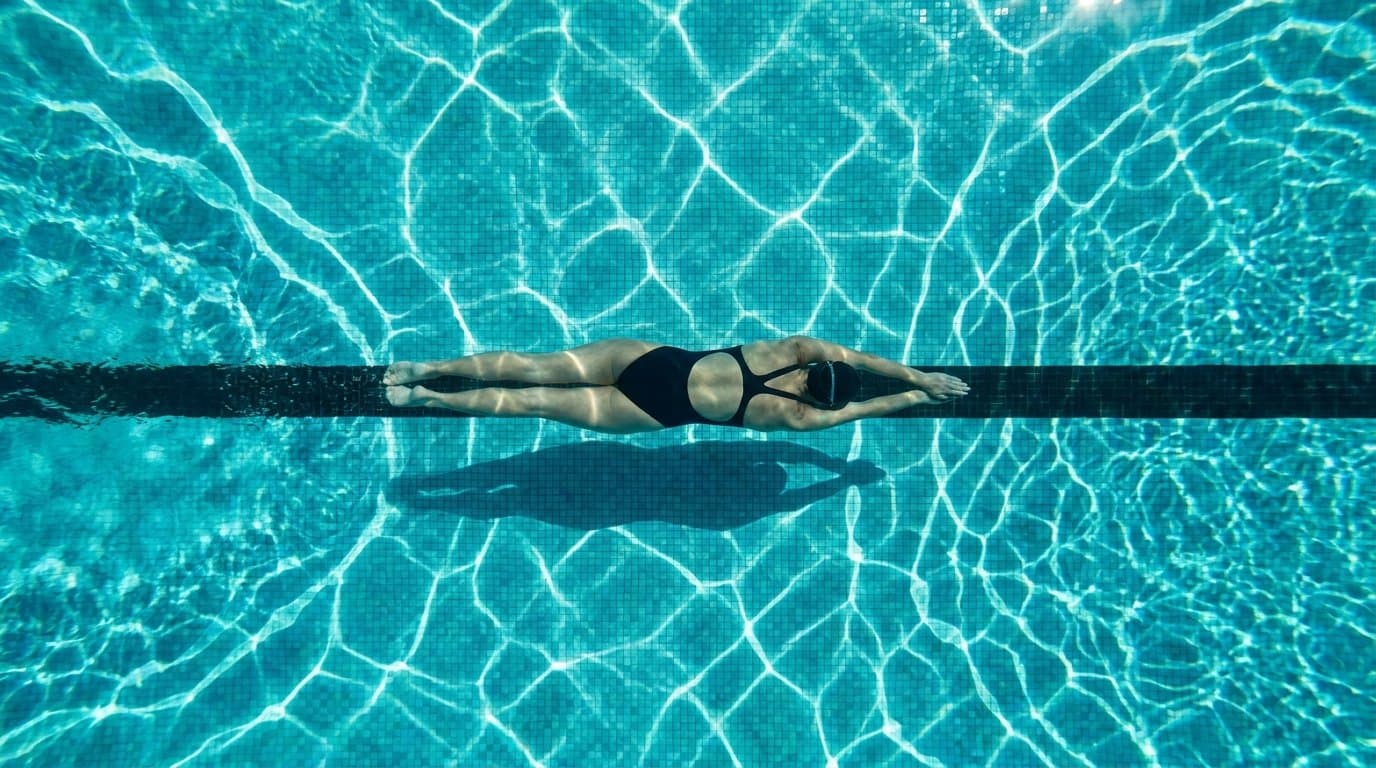
For a long time swimming was drudgery for me: length after length, tile after tile, eyes fixed on the bottom line. I didn't really get faster, just more tired. The water felt like a wall I was running into.
The turning point didn't come from harder training but from a different question: not “how many lengths?” but “how does a single stroke feel?”. This is the story of how counting tiles became a feel for gliding – and why that changes everything, especially on the long course.
The problem: lots of effort, little gliding
I swam at a high rate with the feeling that I had to work constantly. The moment I stopped pulling, I almost came to a stop. That's the classic sign of too much drag and too little glide: the body doesn't carry itself through the water, it has to be driven permanently.
Over 50 metres you can mask that with strength. On the long course you can't – there every wasted movement adds up to leaden fatigue.
The rebuild: position first, then propulsion
I took my stroke apart and rebuilt it in reverse order. First the body position: head down, hips high, a long, calm body. Then the catch: feel the pull, don't yank it. Only at the end did speed come back in.
The key was the glide phase – those quiet fractions of a second in which the body simply runs forward after the pull. That's exactly what I'd been rushing away before.
The moment it clicked
At some point I felt it for the first time: after the pull I shot forward a little without doing anything. I suddenly needed fewer strokes for the same length. The water was no longer a wall but something I pulled myself along.
I still counted – but now my strokes per length, not the tiles. And that number dropped while my speed stayed the same or rose.
What I take from it for your training
Gliding isn't a talent you either have or don't – it's the result of a clean body position and a patient pull. Count your strokes per length and try to cover the same distance with one stroke fewer. That automatically forces more gliding and less waste.
That's exactly what our coaching is about: not grinding out more lengths, but making every movement more efficient. The perfect stroke starts in your head, not your biceps.
Frequently asked questions
- How do I get a better feel for gliding when swimming?
- Build a flat body position first (head down, hips high, long body), then deliberately allow the glide phase after each stroke. Count your strokes per length and try to cover the same distance with fewer strokes – that forces more gliding.
- Why do I stop as soon as I stop pulling?
- That's a sign of too much drag and too little glide – usually from a sinking hip or a high head. A better body position lets the body keep running after the pull instead of braking immediately.
- How do I optimise my technique for the long course?
- Prioritise efficiency over strength: flat body position, a long stroke with clean gliding, a calm rhythm and bilateral breathing. Over long distances, less waste per stroke matters more than short-term speed.
- Is it better to swim many lengths or clean technique?
- In the long run, technique. Many lengths with mistakes reinforce the mistakes. Only once body position and stroke are clean does volume really pay off in speed and endurance.