
5 min read · Updated on July 17, 2026
Short fins: why they improve your technique (when used correctly)
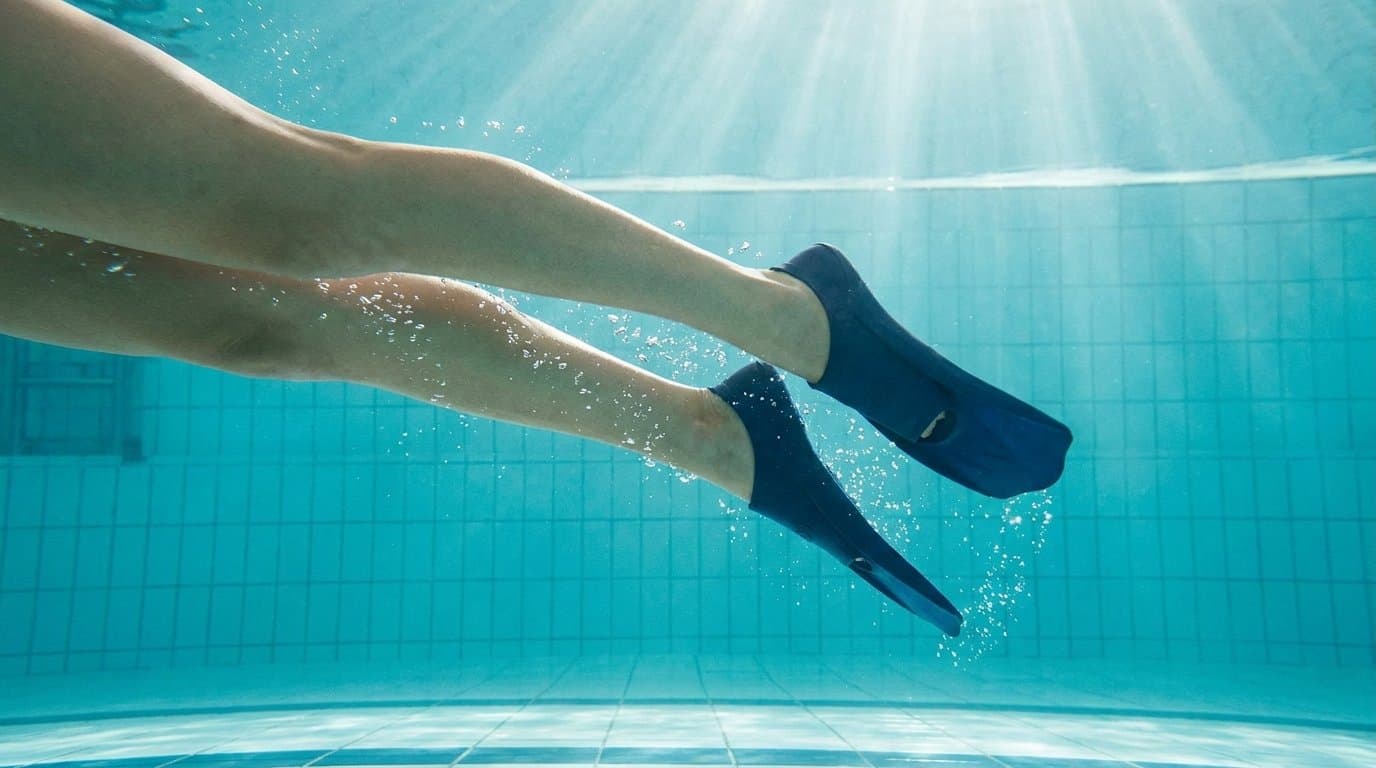
Many see fins as a shortcut. Yet short fins in particular are an excellent technique tool – provided you use them to learn, not as permanent propulsion.
The trick is the short design: it adds propulsion without destroying your natural kick rhythm. That's exactly what sets them apart from long diving or mono fins.
Why short beats long
Long fins force a slow, wide kick and often overload the ankles. Short fins, in contrast, allow a swim-like, high frequency – your kick stays as it should be without fins, just with a bit more drive.
As a result, the movement patterns you learn with fins transfer much more directly to swimming without aids.
What short fins do for your technique
The extra propulsion lifts the hips and stabilises the body position. That frees you to focus on the upper body – catch, high elbow, rotation – without the legs sinking.
- Higher base speed: you experience how a flat, fast body position feels.
- Better ankle mobility: the resistance gently stretches the instep – important for an efficient kick.
- More leg strength: you build strength against the extra resistance.
- Room for technique: stable legs let you refine the arm pull.
The most common mistakes
The biggest mistake is using fins as a crutch and swimming every length with them. Then you get used to propulsion you don't have without them. The second mistake: kicking from the knee. Even with fins the kick comes from the hip, with loose ankles.
So use short fins in measured doses – for technique and kick segments, not for the whole session.
How to build them into training
Use short fins for drills where the legs would otherwise sink (e.g. side-kick or single-arm freestyle) and for short, fast kick sets. Deliberately alternate between lengths with and without fins to transfer the new feeling.
Frequently asked questions
- Are short or long fins better for technique training?
- Short fins. They add propulsion without slowing your kick rate, so your kick stays swim-like. Long fins force a slow, wide kick and transfer less well to swimming without aids.
- Do fins ruin your kick?
- Only if used wrongly. Kicking from the knee or swimming exclusively with fins reinforces bad patterns. Used in measured doses and with a kick from the hip, short fins improve technique.
- Do short fins help with body position?
- Yes. The extra propulsion lifts the hips and stabilises the position, so you can focus on the arm pull without the legs sinking.
- How often should I swim with short fins?
- In measured doses: for individual drills and kick sets within a session, not as permanent propulsion. Regularly switch to lengths without fins to transfer what you've learned.