
6 min read · Updated on July 17, 2026
Pullkick vs. dedicated pull buoy: when to use which tool
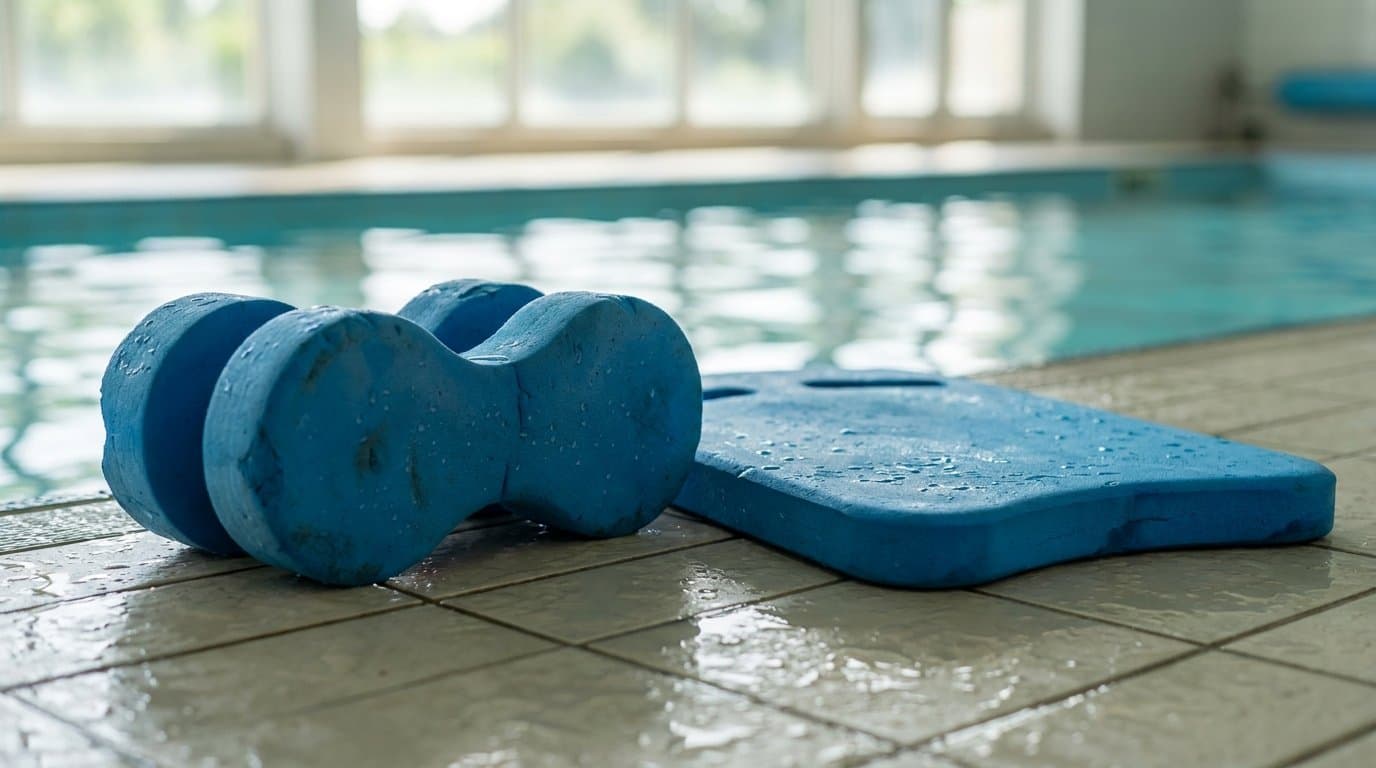
If you know our pullkick guide, you know the pullkick is a hybrid of pull buoy and kickboard. But does that make the classic, dedicated pull buoy redundant? No – the two tools have different strengths.
The difference lies in the buoyancy and the body position they create. Understand that, and you choose deliberately instead of randomly – training exactly what you want to improve.
The dedicated pull buoy: maximum buoyancy, clear isolation
A classic pull buoy has more volume and sits high between the thighs. It lifts the hips strongly, keeps the legs still and lets you forget the kick entirely. That's ideal when you want to focus fully on the catch, pull pattern and rotation.
But the large buoyancy has a downside: it can hide a weak body position. If you only lie flat with lots of float, you won't notice that your hips sink without the aid.
The pullkick: a more realistic position, dual function
The pullkick is more compact and provides less buoyancy. Used as a buoy, your hips sit a little lower – closer to the real swimming position. That makes arm training harder but more transferable.
Its second advantage: you can grip it as a kickboard within the same set and switch seamlessly between pull and kick focus without swapping tools.
When to use which?
As a rule of thumb: a dedicated pull buoy for maximum isolation and strength work on the pull, the pullkick for a realistic body position and flexible transition sets.
- Dedicated pull buoy: long pull sets, focus on catch and high elbow, strength endurance on the pull.
- Pullkick: combined pull-and-kick sets, more realistic hip position, less to carry.
- Use both sparingly: aids are tools for segments, not a permanent replacement for clean swimming without float.
The key principle: don't buy your body position
Whichever tool you use, buoyancy must not replace technique you don't otherwise have. Swim segments completely without aids regularly to check whether your body position holds up without external float.
That's exactly why the pullkick's slightly lower buoyancy is useful: it's closer to reality and tends to reveal weaknesses rather than hide them.
Frequently asked questions
- What's the difference between a pullkick and a pull buoy?
- A dedicated pull buoy has more volume and buoyancy and is meant only for arm training. The pullkick is more compact, gives less buoyancy (a more realistic hip position) and additionally works as a small kickboard for leg training.
- As a beginner, should I buy a pullkick or a pull buoy?
- If you only want one tool, the pullkick is more versatile because it combines both functions. For purely isolated arm training with lots of float, a classic pull buoy is more comfortable.
- Does a pull buoy hide technique mistakes?
- Yes, it can. The strong buoyancy lifts the hips and lets you lie flat even if your body position sinks without the aid. That's why you should regularly swim segments without float.
- How often should I train with buoyancy aids?
- As a targeted tool in one or two technique sessions per week, for specific segments each time. They complement swimming without aids rather than replacing it.