
6 Min. Lesezeit · Aktualisiert am 17. Juli 2026
Paddles: Segen oder Fluch für deine Schultern?
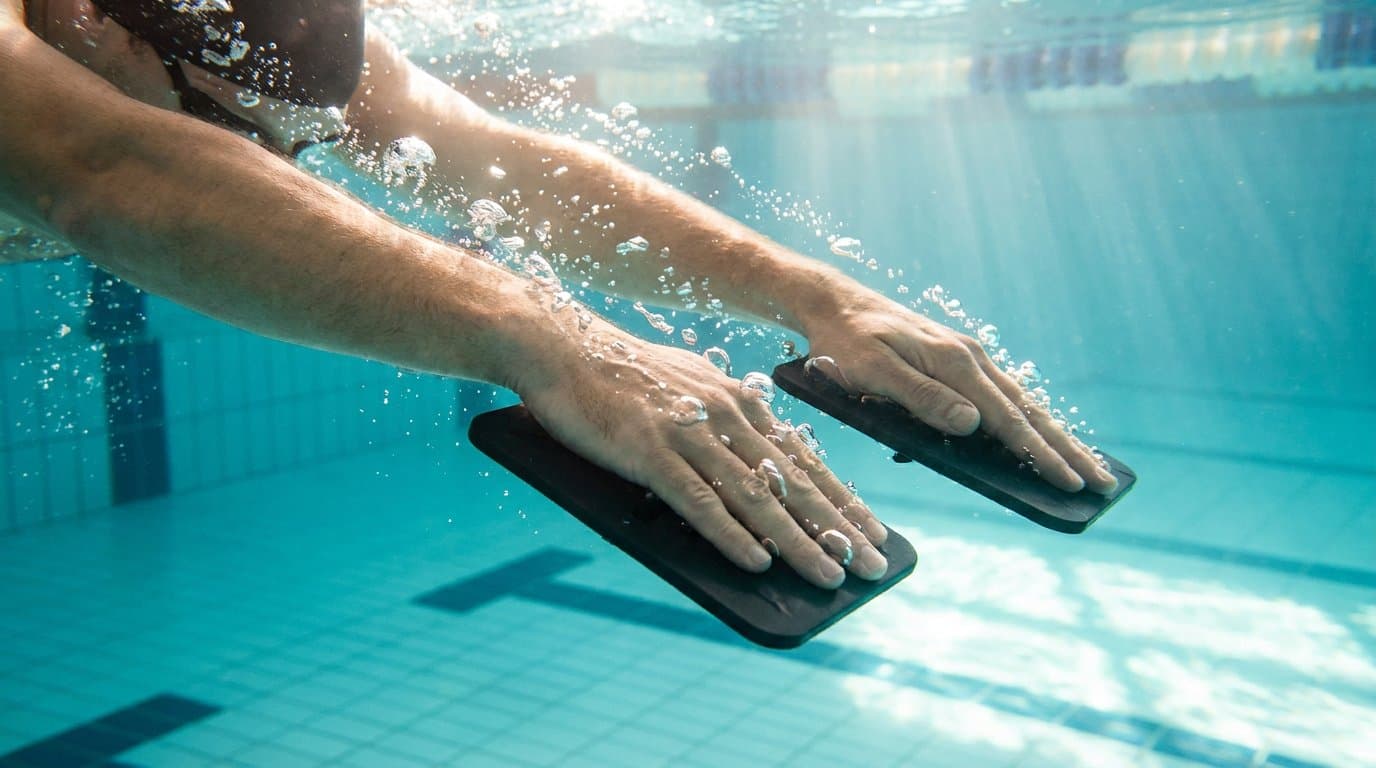
Kaum ein Tool spaltet Schwimmer so wie Paddles. Die einen schwören auf den Kraftzuwachs, die anderen warnen vor Schulterproblemen. Beide haben recht – es kommt darauf an, wie du sie einsetzt.
Physikalisch ist die Sache klar: Paddles vergrößern die Fläche deiner Hand. Mehr Fläche heißt mehr Widerstand pro Zug – mehr Vortrieb, aber auch mehr Last auf Schulter und Ellbogen. Genau darin liegen Chance und Risiko zugleich.
Die Chance: Kraft und Wassergefühl
Gegen den größeren Widerstand trainierst du gezielt die Zugmuskulatur – Kraftausdauer, die sich auf schnelleres Schwimmen überträgt. Noch wertvoller ist der Feedback-Effekt: Eine Paddle drückt spürbar aufs Wasser. Verlierst du den Druck, spürst du sofort, dass dein Catch abreißt oder die Hand falsch steht.
Richtig eingesetzt sind Paddles also weniger Kraftgerät als Technik-Sensor: Sie machen Fehler im Wasserfassen fühlbar.
Das Risiko: die überlastete Schulter
Die Schulter ist ein bewegliches, aber empfindliches Gelenk. Zu große Paddles, zu viel Volumen und schlechte Technik multiplizieren die Belastung mit jedem Zug. Besonders das Übergreifen über die Mittellinie wird mit Paddles gefährlich, weil der Hebel auf die Schulter noch größer wird.
Wichtig: Paddles verstärken deine bestehende Technik – die gute wie die schlechte. Wer mit Fehlern schwimmt, verstärkt sie mit Paddles.
So nutzt du Paddles sicher
Die Regel lautet: Technik zuerst, Kraft danach. Beginne klein und steigere langsam.
- Klein anfangen: lieber eine kleinere Paddle mit guter Technik als eine große mit schlechter.
- Fingerspitzen zuerst eintauchen, sauber auf Schulterbreite – kein Übergreifen.
- Nur kurze Sets, gut aufgewärmt, mit sauberem hohen Ellbogen.
- Bei Schulterschmerz sofort weglassen – Paddles sind kein Muss.
Für wen sind Paddles geeignet?
Für Schwimmer mit solider Grundtechnik, die gezielt Zugkraft und Wassergefühl entwickeln wollen. Für Anfänger ohne stabilen Catch und für Schwimmer mit Schulterbeschwerden sind sie dagegen keine gute Wahl – hier steht die Technik ohne Zusatzlast an erster Stelle.
Kurz: Paddles sind ein Segen für die Technik und ein Fluch für die Schulter, wenn die Technik fehlt. Die Reihenfolge entscheidet.
Häufige Fragen
- Sind Paddles schlecht für die Schultern?
- Nicht grundsätzlich. Zu große Paddles, zu viel Volumen und fehlerhafte Technik (besonders Übergreifen) überlasten die Schulter. Mit kleiner Paddle, sauberer Technik und kurzen Sets sind sie sicher.
- Welche Paddle-Größe soll ich als Anfänger wählen?
- Eine kleine bis mittlere Größe. Kleinere Paddles belasten die Schulter weniger und schulen trotzdem das Wassergefühl. Große Paddles sind erst bei sicherer Technik und guter Kraft sinnvoll.
- Bauen Paddles Kraft oder verbessern sie die Technik?
- Beides – je nach Einsatz. Der größere Widerstand baut Zugkraft auf, und der spürbare Wasserdruck macht Fehler im Catch fühlbar. Als Feedback-Werkzeug sind sie oft wertvoller denn als reines Kraftgerät.
- Sind Paddles für Anfänger geeignet?
- Nur eingeschränkt. Ohne stabilen Catch und saubere Eintauchlinie verstärken Paddles vor allem die Fehler. Erst die Grundtechnik festigen, dann mit kleinen Paddles ergänzen.