
6 Min. Lesezeit · Aktualisiert am 15. Juli 2026
Pullkick: Pullbuoy und Schwimmbrett in einem – so nutzt du ihn richtig
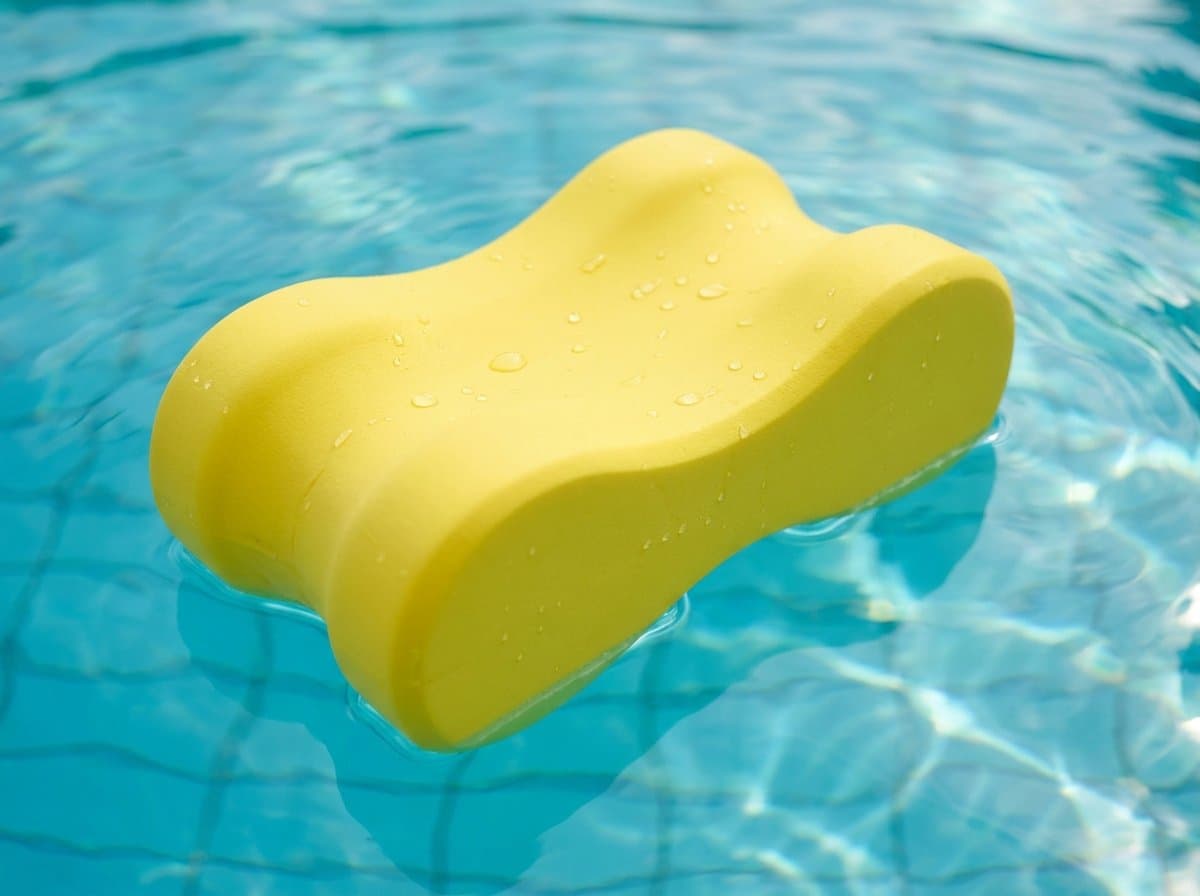
Wer regelmäßig Technik trainiert, kennt das Problem: Am Beckenrand stapeln sich Pullbuoy, Schwimmbrett und Paddles – und die Hälfte davon bleibt ungenutzt. Der Pullkick löst genau das: ein kompaktes Schaumstoffgerät, das Pullbuoy und Schwimmbrett in einer Form vereint.
In diesem Ratgeber erfährst du, was ein Pullkick ist, für wen er sich lohnt, wie du ihn in beiden Funktionen technisch sauber einsetzt – und welche drei Übungen dir am meisten bringen.
Was ist ein Pullkick?
Ein Pullkick ist ein Hybrid-Trainingsgerät aus geschlossenzelligem Schaumstoff (meist EVA), dessen Form so gestaltet ist, dass er sowohl als Pullbuoy zwischen den Oberschenkeln als auch als kleines Schwimmbrett in den Händen funktioniert. Die kompakte Größe ist dabei kein Kompromiss, sondern Absicht: Sie zwingt dich zu einer aktiveren, saubereren Wasserlage als ein großes Brett.
Warum ein Pullkick statt zwei Geräte?
Der offensichtliche Vorteil ist praktisch: ein Gerät weniger in der Schwimmtasche. Der eigentliche Wert liegt aber im Training selbst – du wechselst in einem Set ohne Unterbrechung zwischen Armzug- und Beinschlag-Fokus.
- Isoliertes Armtraining: Als Pullbuoy legt er deine Beine still, damit du dich voll auf Zugmuster und Ellbogenwinkel konzentrieren kannst.
- Effektives Beintraining: Als kleines Brett unterstützt er die Arme, ohne die Schulter zu überstrecken – die Wasserlage bleibt flacher und realistischer.
- Nahtlose Wechselsets: Pull- und Kick-Abschnitte lassen sich direkt kombinieren, ohne am Beckenrand das Gerät zu tauschen.
Als Pullbuoy: Fokus auf Armzug und Wasserlage
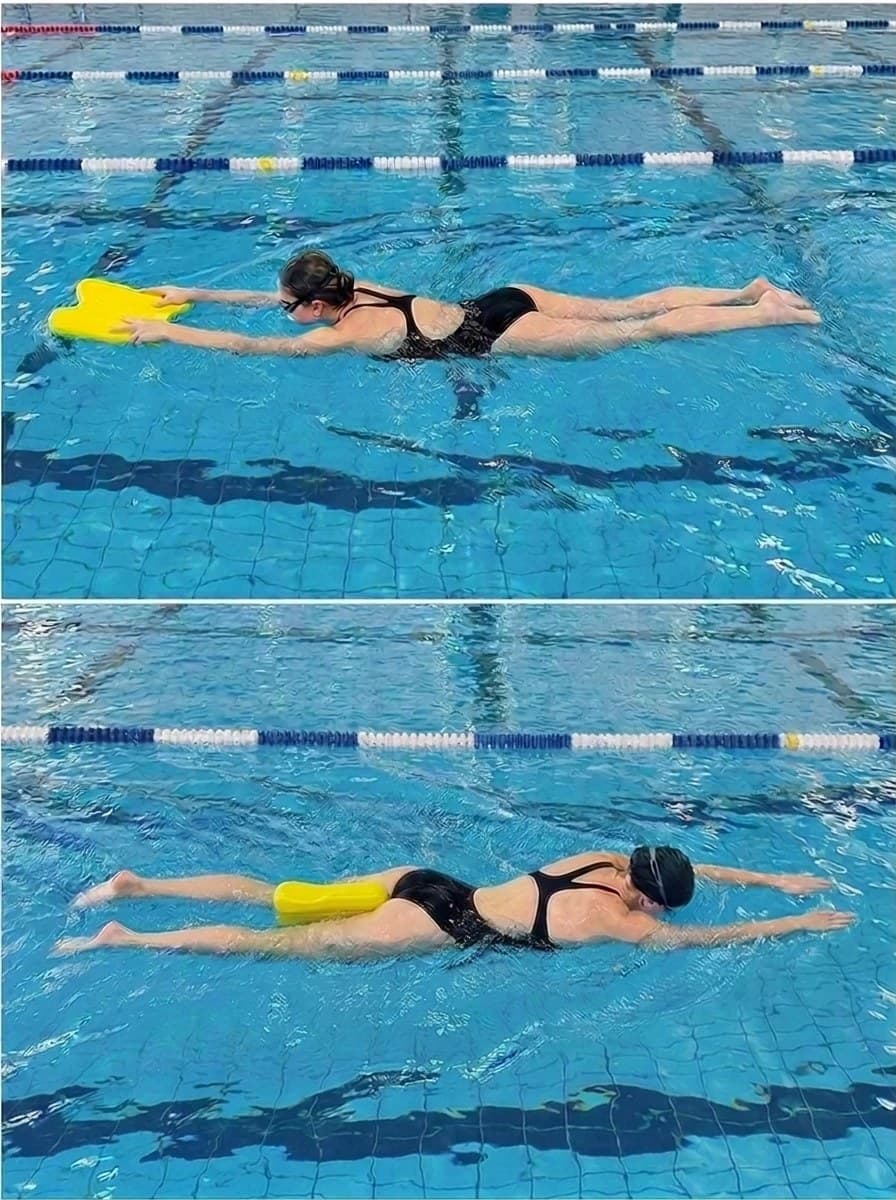
Klemme den Pullkick zwischen die Oberschenkel – so hoch, dass die Hüfte stabil an der Oberfläche liegt. Die Beine bleiben passiv, die Körperspannung kommt aus dem Rumpf. Jetzt gehört deine ganze Aufmerksamkeit dem Armzug: Wasserfassen vorn, hoher Ellbogen, Abdruck bis zur Hüfte.
Der häufigste Fehler: ein Hohlkreuz, weil der Auftrieb die Hüfte hebt, während der Kopf zu hoch bleibt. Blick zum Beckenboden, Nacken lang – dann liegt der Körper wie ein Brett im Wasser.
Als Schwimmbrett: Beinschlag mit besserer Wasserlage
Greife den Pullkick an der breiten Seite und strecke die Arme locker nach vorn. Weil er kleiner ist als ein klassisches Schwimmbrett, liegen Schultern und Brust tiefer im Wasser – genau dort, wo sie auch beim Schwimmen ohne Brett sind. Dein Beinschlag trainiert dadurch unter realistischen Bedingungen.
Achte auf einen Beinschlag aus der Hüfte mit lockeren Fußgelenken. Wenn die Knie stark einknicken, wird der Antrieb klein und der Widerstand groß.
Drei Übungen für dein nächstes Training
Diese drei Sets funktionieren für Anfänger mit sicherer Kraul-Grundtechnik ebenso wie für Fortgeschrittene – passe einfach die Distanzen an.
- Pull mit 3er-Atmung: 4 × 50 m Kraul-Armzug mit Pullkick als Pullbuoy, Atmung alle drei Züge. Schult beidseitige Atmung und einen symmetrischen Zug.
- Kick-Pyramide: 25–50–75–50–25 m Beinschlag mit Pullkick als Brett, Pause je 20 Sekunden. Baut Beinkraft auf, ohne die Technik zu verlieren.
- Wechselset: 4 × 100 m, je 50 m Pull + 50 m Kick ohne Pause beim Wechsel. Genau hier spielt der Pullkick seine Doppelfunktion aus.
Kauftipps: Darauf kommt es an
Achte auf geschlossenzelligen EVA-Schaum (saugt kein Wasser), eine glatte, hautfreundliche Oberfläche und eine Form, die bequem zwischen den Oberschenkeln sitzt. Erwachsene mit kräftigeren Beinen greifen zur Standardgröße; sehr leichte Schwimmer:innen und Jugendliche kommen mit kompakteren Modellen besser zurecht. Preislich liegen gute Pullkicks meist zwischen 15 und 30 Euro – Markenaufschläge lohnen sich selten.
Grenzen des Pullkicks: Wann sich ein Spezialgerät lohnt
So vielseitig der Pullkick ist – er ist ein Kompromiss, kein Ersatz für spezialisierte Geräte in jeder Situation. Als Pullbuoy bietet er weniger Auftrieb als ein großes Schwimmbrett, wenn es rein um maximale Beinruhe beim Armzugtraining geht. Als Schwimmbrett ist er kompakter als ein klassisches Brett, aber sperriger als ein reiner Pullbuoy – bei engen Wenden und einer voll gestreckten Rumpflage kann das kurzzeitig stören.
Für Kinder und Einsteiger:innen ohne gefestigte Grundtechnik ist der Pullkick meist noch keine gute Wahl: Ohne stabile Wasserlage und ausreichend Kraft in Rumpf und Schultern wird das kompakte Gerät schnell zur Überforderung statt zur Hilfe. Hier sind ein großes Schwimmbrett und einfache Grundlagenübungen ohne Zusatzgerät der bessere Einstieg – der Pullkick kommt dann ins Spiel, sobald die Basistechnik sitzt.
Häufige Fragen
- Ist ein Pullkick für Anfänger geeignet?
- Ja – sobald du eine Bahn sicher schwimmen kannst. Gerade Anfänger profitieren davon, Armzug und Beinschlag getrennt zu üben, weil die Bewegung so leichter zu kontrollieren ist.
- Was ist der Unterschied zwischen Pullkick und Pullbuoy?
- Ein Pullbuoy ist nur für das Armtraining gedacht. Der Pullkick hat eine flachere, brettartige Form und funktioniert zusätzlich als kleines Schwimmbrett für das Beintraining – ein Gerät für beide Aufgaben.
- Welche Größe sollte ich wählen?
- Die Standardgröße passt den meisten Erwachsenen. Wichtig ist, dass der Pullkick fest zwischen den Oberschenkeln sitzt, ohne dass du ihn aktiv festklemmen musst – sonst verkrampft die Hüfte.
- Wie oft sollte ich mit dem Pullkick trainieren?
- Als Faustregel: ein bis zwei Technikeinheiten pro Woche mit je 300 bis 600 Metern Pull- und Kick-Anteil. Der Pullkick ist ein Werkzeug für gezielte Abschnitte, kein Dauerbegleiter für die ganze Einheit.
- Was sind die Nachteile eines Pullkicks im Vergleich zu Pullbuoy und Schwimmbrett?
- Der Pullkick bietet weniger Auftrieb als ein großes Schwimmbrett und ist sperriger als ein reiner Pullbuoy, was bei engen Wenden kurz stören kann. Für Kinder und Einsteiger:innen ohne gefestigte Grundtechnik ist er außerdem weniger geeignet – hier sind ein großes Brett und einfache Grundübungen sinnvoller, bis die Wasserlage sicher sitzt.